







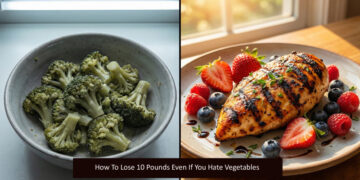




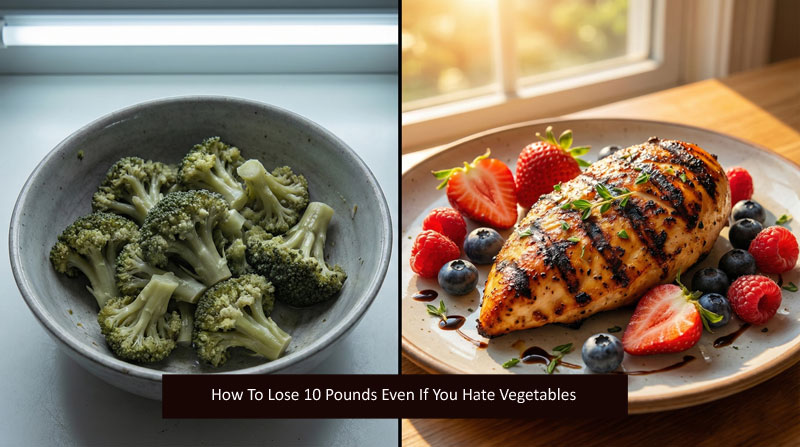
Let’s be honest: somewhere along the line, “healthy eating” became synonymous with miserable piles of steamed broccoli and sad, limp lettuce leaves. If you are someone who genuinely hates vegetables—whether due to texture issues, taste sensitivity, or just childhood trauma from overboiled Brussels sprouts—the standard diet advice can feel incredibly alienating.
You open a diet plan, and Step 1 is “Fill half your plate with greens.” You immediately close the browser.
But here is the good news, and it is scientifically backed: You do not need to eat vegetables to lose weight.
Is it optimal for longevity? Perhaps not. Is it possible to drop 10 pounds (that’s just under a stone, or 4.5kg) safely and effectively without forcing down a single piece of kale? Absolutely.
Weight loss is primarily about biology and physics, not morality or chlorophyll. Here is your comprehensive guide to shifting that weight without pretending to be a rabbit.
The Science: Why You Don’t Need Greens to Burn Fat
To understand how to lose weight without veg, we have to strip away the marketing fluff and look at the mechanics of the human body.
Weight loss is dictated by Energy Balance, often referred to as CICO (Calories In, Calories Out).
If your body burns 2,000 calories a day existing (your Basal Metabolic Rate + activity), and you only eat 1,500 calories of food, your body must find that missing 500 calories of energy from somewhere. It turns to your stored body fat.
It does not matter if those 1,500 calories come from spinach or steak; the energy deficit is what causes the weight loss.
However, vegetables usually serve two main purposes in a diet:
-
Volume: They fill up your stomach for very few calories.
-
Micronutrients: They provide vitamins and fibre.
If we remove the vegetables, we have to solve the problems of Hunger and Nutrition using different tools.
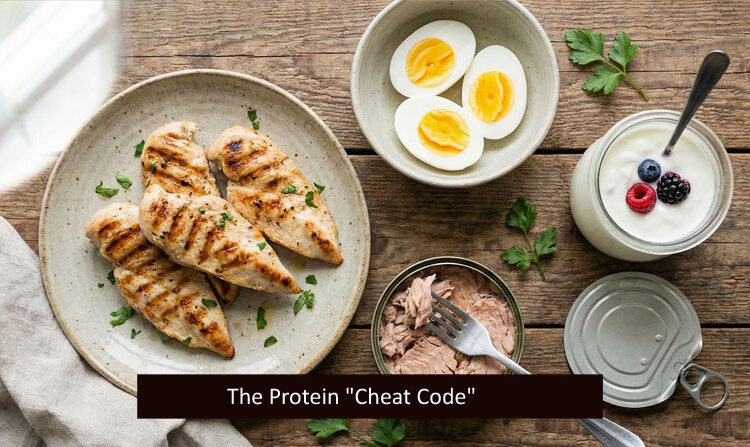
Strategy 1: The Protein “Cheat Code”
If you take away the vegetables, you remove the “filler” on your plate. If you replace that filler with pasta or chips, you will overshoot your calories instantly.
The solution? Aggressive Protein Intake.
Protein is the most satiating macronutrient. It suppresses the hunger hormone (ghrelin) better than fats or carbohydrates. When you aren’t eating veg, protein becomes your best friend.
What to Eat Instead:
-
Lean Meats: Chicken breast, turkey mince, lean beef (5% fat), and pork loins.
-
Fish: Cod, haddock, salmon, and tuna.
-
Dairy: Greek yoghurt (0% fat), cottage cheese, and eggs.
The UK Context: In the UK, we have great access to high-quality lean meats. Instead of a Shepherd’s Pie loaded with peas and carrots, make a “Cottage Pie” using extra lean beef mince, focused on the meat and a smaller portion of mashed potato.
Action Step: Aim for a portion of protein the size of your palm at every single meal. This ensures you stay full, stopping you from reaching for the biscuits an hour later.
Strategy 2: The “Fruit Loophole” for Fibre
The biggest danger of a veggie-free diet is a lack of Fibre.
Without fibre, your digestion will slow down, you will feel bloated, and your cholesterol may rise. The NHS recommends 30g of fibre a day. If you aren’t getting it from broccoli, where do you get it?
The Answer: Fruit and Oats.
Many people who hate the bitterness of vegetables enjoy the sweetness of fruit. While fruit has slightly more sugar (fructose), it is packed with the fibre and vitamins you are missing.
The Best “Non-Veg” Fibre Sources:
-
Raspberries & Blackberries: These are fibre powerhouses. One punnet can have as much fibre as huge pile of greens.
-
Apples & Pears: Eat them with the skin on.
-
Oats: A bowl of porridge in the morning is a fantastic way to front-load your fibre for the day.
-
Beans (The Grey Area): Baked beans are a staple in the UK. While technically a plant, most veg-haters tolerate them. Low sugar baked beans on wholemeal toast is a solid weight-loss meal.
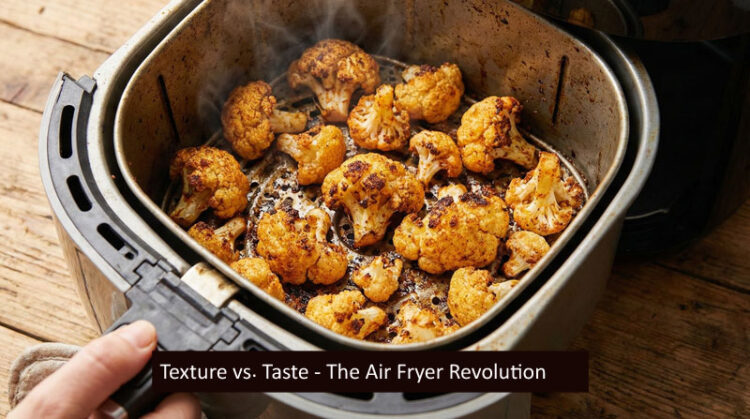
Strategy 3: Texture vs. Taste (The Air Fryer Revolution)
I have a question for you: Do you hate the taste of vegetables, or do you hate the texture?
In the UK, we have a terrible habit of boiling vegetables until they are grey, soggy mush. If that is your only experience, I don’t blame you for hating them.
Before you swear off them forever, try changing the texture.
The “Roast and Salt” Test
Take a vegetable that is relatively neutral, like cauliflower or tenderstem broccoli.
-
Do not boil it.
-
Toss it in a tiny bit of olive oil and plenty of sea salt.
-
Roast it in the oven or Air Fryer until it is crispy and brown on the edges.
The chemical reaction (Maillard reaction) changes the flavour profile completely. It becomes savoury, nutty, and crunchy—more like a chip than a plant. If you still hate it, fair enough. But give the “crispy” method one try.
Strategy 4: The “Toddler Method” (Hiding It)
If you absolutely cannot stomach the sight or texture of a vegetable, but you want the health benefits, treat yourself like a fussy toddler. Blend it.
When you blend vegetables into a sauce, the texture disappears entirely, and the taste is usually masked by the other strong flavours in the dish.
The Bolognese Hack: Next time you make a Spaghetti Bolognese or a Chilli Con Carne:
-
Take onions, peppers, carrots, and mushrooms.
-
Put them in a food processor and blitz them until they are a paste.
-
Fry this paste with your garlic before adding the meat.
-
Add your chopped tomatoes and spices.
You will literally not know they are there. The sauce will just be thicker and richer. You get the weight loss benefits of volume and fibre, with zero “vegetable” experience.
Strategy 5: Supplements are Non-Negotiable
If you are committed to the “No Veg” life, you must be responsible about your health. Vegetables provide essential micronutrients that keep your energy levels up and your immune system functioning.
If you cut them out and don’t replace them, you will feel lethargic, making it harder to stay active and burn calories.
The Essential UK Stack:
-
A High-Quality Multivitamin: Look for one that covers A, C, E, and K.
-
Vitamin D3: Essential for everyone in the UK, especially in winter, regardless of diet.
-
Psyllium Husk (Optional): If you find you are constipated despite eating fruit, buy a tub of Psyllium Husk powder (available at Holland & Barrett or Amazon). Mix a teaspoon into water. It’s pure fibre and will keep things moving.
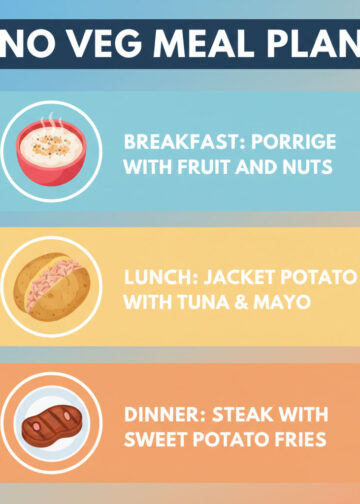
A Sample “No-Veg” Meal Plan (1,600 Calories)
Here is what a day of eating could look like to lose that 10 pounds. Notice the high protein and strategic fruit use.
Breakfast: The Porridge Power Bowl
-
40g Porridge Oats made with water or skimmed milk.
-
1 scoop of Whey Protein powder stirred in (Vanilla or Chocolate).
-
Handful of blueberries.
-
Why? High fibre, high protein, feels like a treat.
Lunch: The British Classic (Modified)
-
Jacket Potato (medium sized).
-
1 tin of Tuna (in spring water/brine, not oil) mixed with a tablespoon of light mayo.
-
Sweetcorn (if you tolerate it—it adds a nice crunch).
-
Why? Very filling, low fat.
Dinner: Steak and Chips
-
Lean Sirloin Steak (pan-fried with low-calorie spray oil).
-
Oven chips (weigh your portion! Aim for 150g).
-
Serve with a side of sliced apple or pear afterwards to make up for the lack of greens on the plate.
Snacks:
-
A boiled egg.
-
A banana.
-
0% Fat Greek Yoghurt with a drizzle of honey.
The “Hydration” Trap
Vegetables are mostly water (cucumber is 96% water). When you stop eating them, you are removing a massive source of hydration from your diet.
Dehydration often masks itself as hunger. You might feel “peckish” and reach for a packet of crisps, when actually you are just thirsty.
The Rule: If you are skipping the salad, you need to drink an extra 500ml of water a day. Keep a bottle on your desk. If you hate plain water, use sugar-free squash (Robinsons, etc.). It counts towards your intake and contains virtually zero calories.